

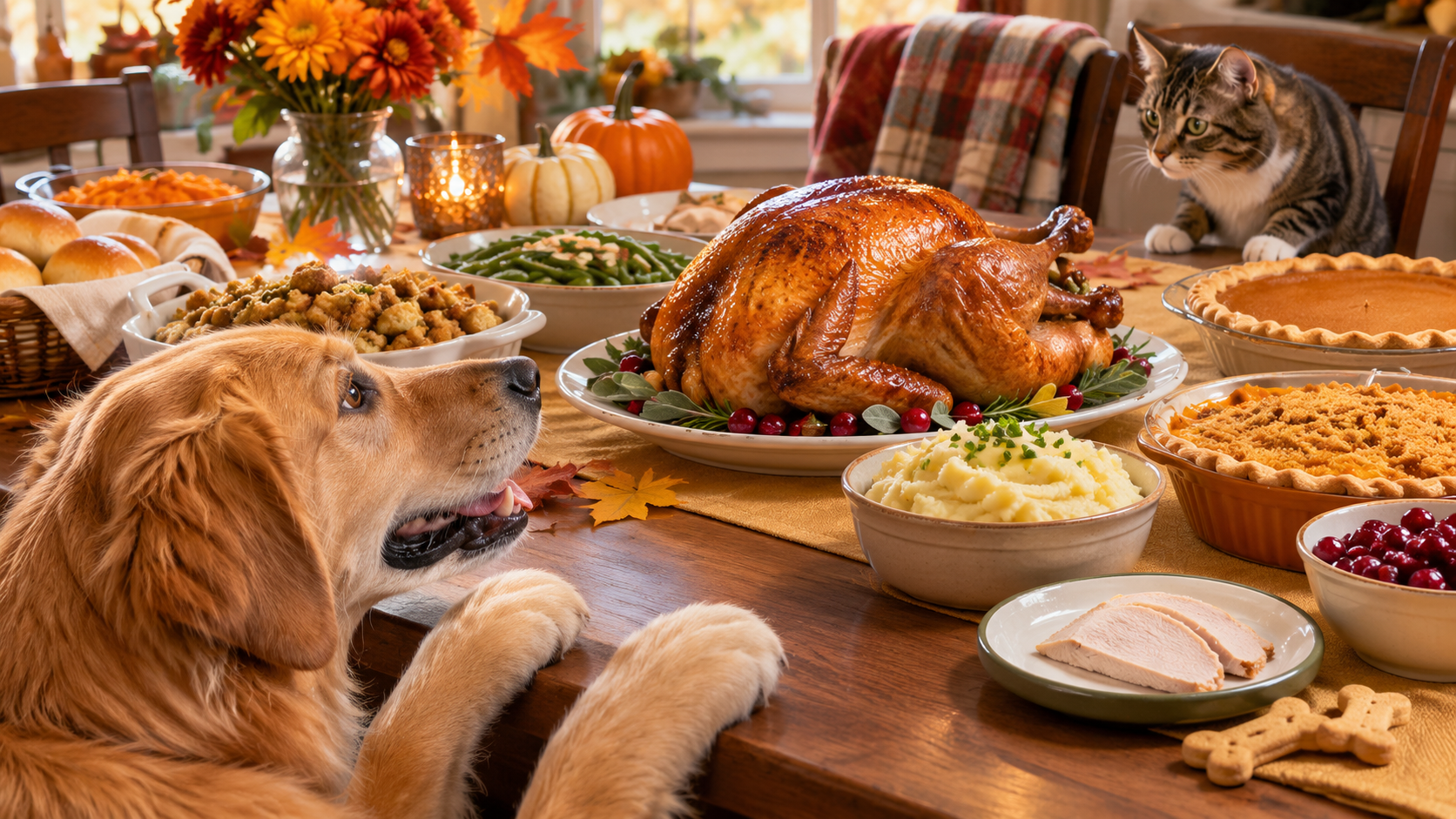
Imagine experiencing Thanksgiving from your dog’s perspective.
The kitchen smells incredible. People are carrying plates of food everywhere. Someone just dropped a piece of turkey, and nobody seems to have noticed.
For your dog, this might be the greatest day of the year.
Your cat may have a different strategy, quietly watching the kitchen until everyone leaves the turkey unattended.
While it’s easy to laugh at our pets’ holiday food obsession, Thanksgiving introduces some real health risks that deserve attention.
At Canyon Small Animal Hospital in Caldwell, ID, we want local pet owners to enjoy Thanksgiving without unexpected veterinary emergencies.
Let’s look at the holiday from your pet’s perspective and identify where trouble can begin.
The Morning: When the Cooking Starts
Thanksgiving food hazards often appear before dinner is even served.
Raw ingredients, baking supplies, and prepared dishes may be left on countertops while everyone cooks.
One particularly dangerous ingredient is unbaked yeast dough.
If swallowed, yeast dough can expand inside a pet’s stomach and produce alcohol as it ferments.
This can cause abdominal swelling, pain, disorientation, and potentially serious complications.
Chocolate, raisins, and sugar-free baking ingredients are other concerns.
Chocolate contains theobromine and caffeine, which can affect the heart and nervous system.
Raisins can cause acute kidney injury in dogs.
Some sugar-free products contain xylitol, which can cause dangerously low blood sugar and liver injury in dogs.
Keeping pets away from food preparation areas can prevent many accidental exposures.
The Afternoon: When the Turkey Comes Out
Once the turkey is ready, your pet’s interest will probably reach a new level.
Fortunately, plain, fully cooked turkey meat without bones, skin, or seasoning can be a suitable occasional treat for many healthy dogs and cats.
But Thanksgiving turkey often contains ingredients that aren’t appropriate for pets.
Butter, garlic, onions, and salty seasonings can cause problems.
Turkey skin is particularly fatty and may contribute to digestive upset or pancreatitis.
Cooked turkey bones are another serious concern because they can splinter or cause intestinal blockages.
If you’d like to share turkey, set aside a small, unseasoned portion before serving the rest.
The Dinner Table: A Few Bites Can Add Up
One person offers the dog a little stuffing.
Someone else slips them a bite of mashed potatoes.
Then a child shares a piece of casserole.
Individually, these may seem like small treats, but together they can create a significant dietary change.
Stuffing often contains onions and garlic, which can damage red blood cells in dogs and cats.
Mashed potatoes may contain butter, cream, and seasonings.
Casseroles frequently include rich sauces, fried onions, and other ingredients that aren’t suitable for pets.
Even when a food isn’t directly toxic, too much fat can cause vomiting, diarrhea, or pancreatitis.
This is why it’s important for everyone at the table to follow the same rules about feeding pets.
Dessert Time: The Most Dangerous Temptations
When dessert comes out, keep a particularly close eye on your pets.
Chocolate pies, brownies, and cookies can contain ingredients that are toxic to dogs and cats.
Dark chocolate and baking chocolate are especially concerning.
Raisin-filled baked goods are dangerous for dogs because grapes and raisins can cause acute kidney injury.
Sugar-free desserts may contain xylitol.
Even traditional desserts such as pumpkin pie can be too rich for pets.
Plain, unsweetened pumpkin is generally a better choice than pie filling, but it should still be offered in moderation.
After Dinner: The Trash Can Adventure
For some dogs, the real Thanksgiving feast begins when everyone starts cleaning up.
A trash can filled with turkey bones, corn cobs, food wrappers, and greasy leftovers can be irresistible.
Unfortunately, swallowing these items can cause serious complications.
Cooked bones may splinter and injure the digestive tract.
Corn cobs and food packaging can become lodged in the intestines, creating an obstruction.
Symptoms may include repeated vomiting, abdominal pain, loss of appetite, lethargy, or difficulty passing stool.
Some obstructions require surgical treatment.
Secure garbage containers and dispose of food scraps promptly to reduce the risk.
The Next Morning: When Symptoms May Appear
Not every Thanksgiving food accident causes immediate symptoms.
A dog that ate a large amount of fatty food may develop vomiting or abdominal pain hours later.
A pet that consumed onions or garlic may not show signs of anemia until several days afterward.
Watch for changes in appetite, energy, behavior, and bathroom habits.
Repeated vomiting, diarrhea, significant abdominal pain, or unusual weakness warrants veterinary attention.
Seizures, collapse, difficulty breathing, or severe abdominal swelling require emergency care.
What to Do If Your Pet Eats Something Dangerous
If your pet gets into Thanksgiving food, try to identify exactly what they consumed.
Check ingredient labels, estimate the amount eaten, and note approximately when it happened.
Contact your veterinarian or an emergency veterinary hospital for guidance.
For suspected poisoning, you can also call ASPCA Animal Poison Control at (888) 426-4435 or Pet Poison Helpline at (855) 764-7661. Fees may apply.
Do not induce vomiting or give home remedies without veterinary instructions.
If your pet ate grapes, raisins, xylitol, or another potentially dangerous ingredient, don’t wait for symptoms before seeking advice.
A Better Thanksgiving Menu for Your Pet
Instead of sharing rich holiday dishes, consider preparing a small treat specifically for your dog or cat.
Plain cooked turkey, unseasoned green beans, or cooked sweet potato may be appropriate for many healthy pets.
Cats generally benefit more from small portions of plain meat than vegetable-based treats.
If your pet has allergies, digestive sensitivities, or a prescription diet, stick with their regular food.
You can also make the holiday special with a favorite toy, extra playtime, or a relaxing walk.
Helping Caldwell Pets Enjoy the Holiday Safely
Thanksgiving is full of wonderful traditions, and our pets are often right in the middle of them.
By keeping dangerous ingredients out of reach, securing leftovers, and choosing appropriate treats, you can help prevent avoidable health problems.
At Canyon Small Animal Hospital in Caldwell, ID, we’re committed to helping local dogs, cats, and their families stay healthy throughout the year.
If your pet eats something concerning or develops unusual symptoms, contact our veterinary team for guidance. For suspected poisoning or severe symptoms, seek emergency veterinary care immediately.
With a little preparation, Thanksgiving can be just as enjoyable for your pets as it is for everyone else.